
Recognising human capability as a core organisational asset one that confers market leverage and sustainable competitive advantage is becoming increasingly prevalent in international business. Beyond systems, processes, and data, it is the human dimension that often determines whether cross-border engagement succeeds or stalls.
Our starting premise is that human understanding is inherently nuanced and cannot always be made explicit or transferred mechanically. For this reason, we place particular emphasis on the discipline of communication and interpretation. Through extensive professional engagement in China, we have come to appreciate that effectiveness in international collaboration depends not only on what is communicated, but on how it is perceived, contextualised, and internalised across cultures.
Within the Chinese commercial environment, the concepts of guanxi (关系), mianzi (面子), and hanxu (含蓄) are of central importance. While these ideas are often discussed at an interpersonal level, their influence extends well beyond individual relationships. They shape inter-firm dynamics, negotiation behaviour, decision-making processes, and interactions with stakeholders across organisational hierarchies.
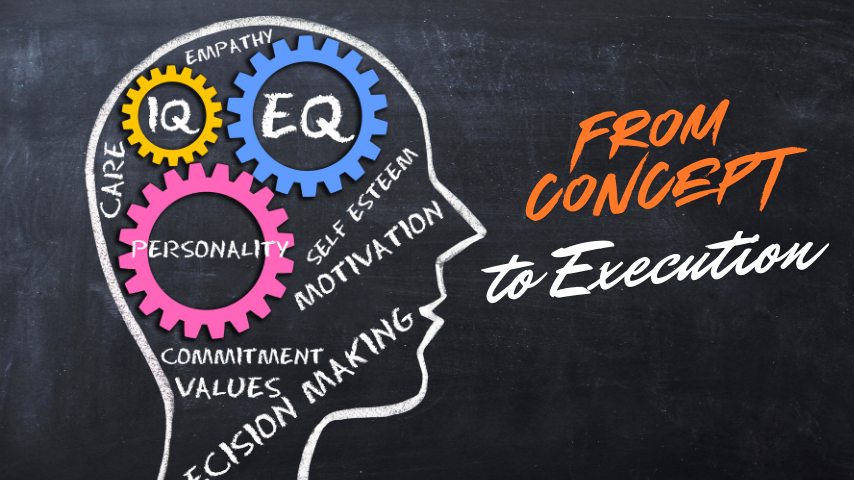
In working with international partners, we consciously integrate these cultural dimensions into our operational and strategic approach. We contend that a genuinely “shared mindset” cannot be imposed through contracts or procedures alone; it emerges through emotional intelligence — the capacity to recognise differing value systems, manage expectations, and respond appropriately to implicit signals.
At the centre of this process lies trust. Not as an abstract principle, but as a practical outcome of consistency, reliability, and long-term engagement. Trust develops through repeated interaction and demonstrated respect, enabling collaboration to move beyond transactional efficiency towards durable, value-creating relationships.
In complex intercultural settings, emotional intelligence functions not as a soft attribute, but as strategic capital. It reduces friction, enhances alignment, and allows organisations to operate effectively within environments where formal structures alone are insufficient. Those who invest in this capability are better positioned to navigate uncertainty, sustain partnerships, and convert cultural diversity into a source of competitive strength.